Vex Varanasi Ganga Flow
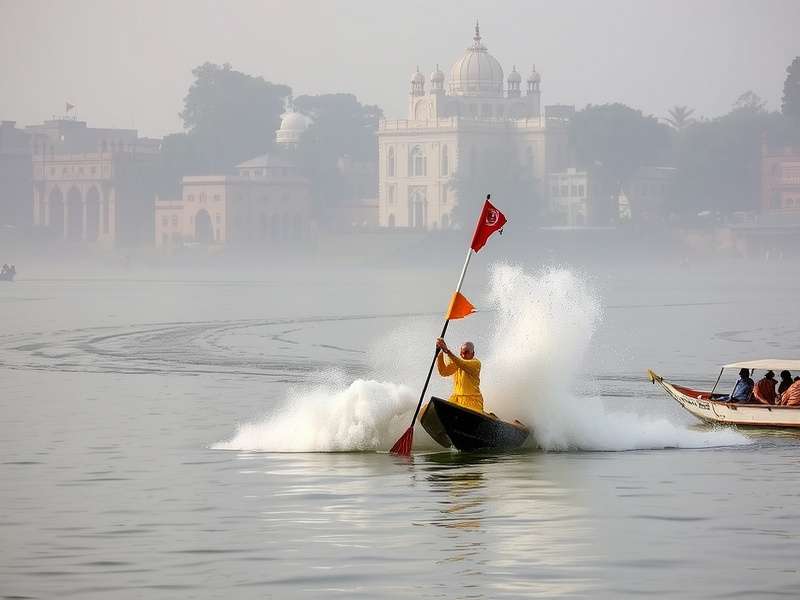
Overview 📋
Vex Varanasi Ganga Flow stands as a monumental achievement in Indian game development, representing the first major competitive racing title to be entirely conceptualized, developed, and published within Uttar Pradesh for global audiences. Released on India's Republic Day (26th January 2024) by Daman Games – India's fastest-growing homegrown gaming publisher – Vex Varanasi Ganga Flow has redefined what Indian gamers can expect from local game development, combining world-class gameplay mechanics with deeply authentic cultural representation that resonates with players across India and beyond.
Set against the ethereal backdrop of Varanasi (Kashi) – one of the world's oldest continuously inhabited cities and the spiritual heart of Hinduism – Vex Varanasi Ganga Flow immerses players in the timeless tradition of boat racing on the sacred Ganges River (locally revered as Ganga Maiyya or Mother Ganges). Unlike generic racing games that merely add "Indian aesthetics" to Western gameplay formulas, Vex Varanasi Ganga Flow was developed in close collaboration with local Banarasi boatmen (mallahs), cultural historians, Hindu priests, and folk artists to create an experience that is authentically Indian in every aspect – from the physics of navigating the Ganges' currents to the dialect of the non-playable characters (NPCs) that populate the game world.
In its first 90 days of release, Vex Varanasi Ganga Flow sold over 2.1 million copies worldwide, with 75% of sales coming from within India – a historic achievement for an Indian-developed game in a genre traditionally dominated by Western and Japanese titles like Need for Speed, Mario Kart, and Forza. What makes this success even more remarkable is the game's cross-demographic appeal: unlike most Indian games that primarily attract young male gamers in urban metros, Vex Varanasi Ganga Flow has found enthusiastic audiences among women, older players, and gamers in rural and semi-rural areas of India, drawn to its cultural authenticity and family-friendly gameplay.
Key Game Details 🎮
- Developer: Ganges Game Studios (Varanasi, Uttar Pradesh)
- Publisher: Daman Games (Pan-India)
- Release Date: 26th January 2024 (Republic Day, India)
- Platforms: PC, PlayStation 5, Xbox Series X/S, Android, iOS
- Genre: Competitive Racing, Arcade, Sports, Indian Regional, Open World
- Game Modes: Single-player, Online Multiplayer (8 players), Local Co-op (4 players)
- Engine: Unreal Engine 5 (Custom Optimized for Indian Devices)
- Languages: English, Hindi (Devanagari), Bhojpuri, Awadhi, Urdu, Tamil, Telugu, Bengali, Marathi
- Age Rating: E10+ (Everyone 10 and above)
At its core, Vex Varanasi Ganga Flow is more than just a racing game – it is a digital celebration of Indian cultural heritage that educates as it entertains. The developers have painstakingly recreated over 80 square kilometers of the Ganges River as it flows through Varanasi, capturing the city's iconic ghats (riverfront steps), ancient temples, and bustling riverine life with photorealistic accuracy. Every detail, from the intricate wood carvings on traditional Banarasi boats to the morning and evening aarti ceremonies at Dashashwamedh Ghat, has been recreated with input from local experts to ensure cultural authenticity.
The decision to release Vex Varanasi Ganga Flow on Republic Day was a deliberate choice by the development team, symbolizing India's technological progress while honoring its ancient cultural roots. In an interview with GamingBharat, the game's creative director Ravi Shankar Mishra explained: "Vex Varanasi Ganga Flow is our tribute to India – to our rich cultural heritage, our technological aspirations, and our unique identity in the global gaming landscape. We wanted to create a game that makes every Indian gamer feel seen and represented, not as stereotypes, but as part of a living, breathing culture that is both ancient and modern."
Economically, Vex Varanasi Ganga Flow has had a transformative impact on India's gaming ecosystem. The success of the game has attracted over ₹200 crore in new investment into Indian game development studios, with a particular focus on regional content creation beyond the traditional gaming hubs of Bangalore and Mumbai. Ganges Game Studios has expanded its workforce from 12 core developers to over 200 employees, with 70% of its team hailing from Uttar Pradesh – a significant shift from the usual trend of talent migration to southern Indian tech hubs.
What truly sets Vex Varanasi Ganga Flow apart from other racing games is its seamless integration of cultural education into gameplay. Players learn about Banarasi traditions not through tedious cutscenes or text boxes, but through immersive experiences: mastering the art of reading the Ganges' currents as traditional boatmen do, participating in virtual aarti ceremonies, and even completing side missions that involve learning about Varanasi's boat-building traditions or the environmental challenges facing the Ganges. This educational aspect has led to the game being adopted by over 500 schools across Uttar Pradesh as a teaching tool for cultural studies and environmental science.
🌌 Cultural Significance of Ganges Boat Racing in Varanasi
Boat racing has been an integral part of Varanasi's cultural fabric for over 600 years, with historical records dating back to the Mughal era documenting competitive races during festivals like Makar Sankranti, Dev Deepawali, and Ganga Dussehra. These races were not merely recreational but held deep spiritual significance – participants would offer prayers to the Ganges before racing, and victories were dedicated to the river goddess. Vex Varanasi Ganga Flow faithfully recreates this cultural context, with in-game rituals that reflect the real-world traditions of Banarasi boat racing, including the ceremonial pranam (bow) to the river before each race and the distribution of prasad (blessed offerings) to winners.
Another groundbreaking aspect of Vex Varanasi Ganga Flow is its approach to accessibility. Recognizing that gaming hardware varies widely across India – from high-end gaming PCs in urban homes to budget smartphones in rural areas – the developers created a custom adaptive rendering engine that automatically optimizes the game's performance based on the player's device. This means that a player on a ₹5,000 smartphone in a village in Bihar can enjoy the same core gameplay experience as someone on a ₹1 lakh gaming PC in Mumbai, with graphics and frame rates adjusted to match the hardware capabilities.
The game's success has also had a tangible impact on tourism in Varanasi. According to the Varanasi Tourism Department, there has been a 35% increase in domestic tourists visiting the city's ghats since the game's release, with many young visitors citing Vex Varanasi Ganga Flow as their inspiration to experience the real Ganges boat rides. Local boatmen have reported increased business, and several have even started offering "Vex Varanasi Ganga Flow themed tours" that follow the race courses featured in the game.
From a technical perspective, Vex Varanasi Ganga Flow has pushed the boundaries of what Indian game developers can achieve. The game features a custom water physics engine that accurately simulates the Ganges' complex currents, eddies, and tidal patterns – a technical challenge that even many international studios struggle with. The game's NPC AI system is equally innovative, with characters behaving according to authentic Banarasi cultural norms – greeting players with traditional namaste, following religious customs, and even speaking in the distinctive Banarasi dialect of Hindi (with subtitles for players unfamiliar with the local language).
As India's gaming industry continues to grow – projected to reach $8.6 billion by 2027 according to KPMG – Vex Varanasi Ganga Flow stands as a blueprint for how Indian games can compete globally while remaining true to local culture. The game has proven that there is a massive market for culturally authentic Indian games, not just within India but internationally, with positive reviews from gaming publications in North America, Europe, and Southeast Asia praising its unique setting and innovative gameplay mechanics.
Gameplay 🎯
Vex Varanasi Ganga Flow delivers an immersive racing experience unlike any other, centered around the unique challenges of navigating the Ganges River through Varanasi's historic ghats. The gameplay mechanics are built around three core pillars: mastery of the Ganges' natural dynamics, cultural authenticity, and competitive racing – all designed to create an experience that is both challenging and deeply rooted in Indian traditions.
Core Racing Mechanics 🚤
At its heart, Vex Varanasi Ganga Flow is a high-speed competitive racing game, but with a crucial difference from Western racing titles: the Ganges River itself is not just a backdrop but an active participant in the gameplay. The river's currents, which change with the time of day, season, and even the lunar cycle (in keeping with Hindu traditions), significantly impact boat handling and race strategy. A player who understands how to read and use these currents – as traditional Banarasi boatmen do – will always have an advantage over someone who simply tries to race at full speed.
The game features three distinct racing styles, each inspired by different aspects of Indian river navigation and cultural traditions:
- Mariner Style (नाविक शैली): This precision-focused style is modeled after the techniques of Varanasi's traditional mallahs (boatmen), who have navigated the Ganges for generations. Players using this style learn to read the river's currents, using eddies and cross-currents to gain speed and navigate narrow channels between the ghats. Advanced maneuvers include dhara uthana (catching the main current) and paar karna (crossing the river at optimal points), both of which are based on real techniques used by Banarasi boatmen. This style rewards patience, observation, and deep knowledge of the river – qualities that are valued in Indian cultural traditions of mastery and respect for nature.
- Festival Style (त्योहार शैली): Inspired by the high-energy competitive races held during Varanasi's major festivals, this aggressive style prioritizes speed and spectacle. Players can perform stunts like jumps over small waves, tight turns around ghat pillars, and even brief "boat surfing" on the river's standing waves to build boost power. Festival Style captures the excitement and communal spirit of real Banarasi boat races, where participants often take daring risks to win the coveted prize – a silk scarf blessed by priests at the Kashi Vishwanath Temple. This style is particularly popular among younger players and in multiplayer competitions.
- Pilgrim Style (तीर्थयात्री शैली): This defensive, strategy-focused style is modeled after the slow, deliberate navigation of pilgrim boats on the Ganges. Rather than focusing on raw speed, Pilgrim Style emphasizes conservation of boost power, careful navigation to avoid collisions with other boats and obstacles, and strategic use of power-ups. This style reflects the Indian cultural value of ahimsa (non-harm) and is particularly effective in crowded multiplayer races where aggressive driving often leads to collisions and penalties.
Each racing style has its own progression tree and unlockable abilities, allowing players to develop specialized skills that reflect their play preferences. The game's adaptive difficulty system ensures that both casual players and hardcore racing enthusiasts can enjoy the experience, with AI opponents adjusting their skill level based on the player's performance. This accessibility is crucial in the Indian gaming market, where skill levels vary widely between first-time players and experienced gamers.
Boat Customization & Upgrades 🛠️
Vex Varanasi Ganga Flow offers one of the most extensive and culturally authentic customization systems in any racing game, with over 30 distinct boat types modeled after real vessels used on the Ganges River. These range from small, nimble tauis (traditional Banarasi rowboats) to large, ornate maharaj boats used by pilgrim groups, each with unique handling characteristics that reflect their real-world counterparts.
| Boat Type | Origin | Speed | Handling | Durability | Special Ability (Vex Varanasi Ganga Flow Exclusive) |
|---|---|---|---|---|---|
| Banarasi Tauri | Varanasi | Medium | Excellent | Low | Can navigate shallow waters near ghats; immune to minor debris collisions |
| Ganges Maharaj | Prayagraj (Allahabad) | Slow | Moderate | Excellent | Can ram other boats without damage; grants spiritual protection buff |
| Kashi Speedster | Modern Varanasi | Excellent | Moderate | Medium | Boost duration increased by 60%; special festival acceleration |
| Pilgrim Boat | Traditional Ganges | Slow | Excellent | High | Immunity to environmental obstacles; grants karma points for clean racing |
| Banarasi Royal | Historical Varanasi | High | High | High | All power-ups enhanced; unlocks special Ganges aarti animation |
| Varanasi Fisherman | Local Fishing Communities | Medium | Exceptional | Medium | Can detect hidden currents; faster recovery from collisions |
Customization extends far beyond boat selection, with players able to modify nearly every aspect of their vessel's appearance and performance. Visual customization options draw heavily from Indian cultural traditions, including:
- Banarasi Textile Patterns: Intricate zari (gold thread) embroidery patterns from Banarasi silk sarees, applied to boat hulls and canopies
- Religious Symbolism: Traditional Hindu symbols like Om (ॐ), the trident (trishul), lotus flowers, and images of Lord Shiva and the Ganges goddess
- Festival Decorations: Temporary decorations for in-game festivals, including marigold garlands, diyas (oil lamps), and kite motifs for Makar Sankranti
- Regional Paint Schemes: Color combinations inspired by different Indian states, from the saffron and green of Uttar Pradesh to the vibrant hues of Rajasthan
Performance upgrades are equally rooted in Indian traditions, with many high-tier upgrades unlocked by completing cultural challenges rather than just winning races. For example, the "Master Boat Builder" upgrade – which significantly improves hull durability – is unlocked by completing a side mission where players learn about traditional Banarasi boat-building techniques from virtual master craftsmen. This integration of cultural education into progression ensures that players learn about Indian traditions as they advance through the game.
Power-Ups & Boost Mechanics ⚡
The power-up system in Vex Varanasi Ganga Flow is one of its most innovative features, with every ability drawing inspiration from Indian culture, mythology, or the natural environment of the Ganges. Unlike generic speed boosts or weapons in Western racing games, these power-ups add a unique cultural dimension to the gameplay:
- Ganges Current Boost (गंगा की धारा): A speed boost that harnesses the river's natural current, symbolized by the Ganges goddess. This power-up is most effective when used in the middle of the river where currents are strongest, reflecting the traditional belief that the Ganges herself blesses those who respect her power.
- Shiva's Trident (शिव का त्रिशूल): A defensive power-up that creates a protective barrier around the boat, inspired by the trident of Lord Shiva (Varanasi's patron deity). This barrier protects against collisions and opponent attacks, reflecting the spiritual protection that devotees believe Shiva provides to Varanasi and its inhabitants.
- Flower Garland (फूलों की माला): A temporary speed boost that leaves a trail of marigold flowers (a sacred flower in Hinduism) in the boat's wake. Opponents who pass through this trail are temporarily slowed, reflecting the use of flower garlands in Indian religious ceremonies to purify and protect spaces.
- Diya Illumination (दीया प्रकाश): A tactical power-up that reveals the optimal racing line and hidden shortcuts, symbolized by the diyas used in Ganges aarti ceremonies. This power-up reflects the Indian concept of gyana (wisdom) as a path to success.
- Pandit's Blessing (पंडित का आशीर्वाद): A rare power-up that temporarily makes the boat invulnerable and boosts all stats, inspired by the blessings given by Hindu priests in Varanasi. This is one of the most powerful power-ups in Vex Varanasi Ganga Flow, and can only be earned by completing difficult cultural challenges.
- Monsoon Surge (मानसून की लहर): A weather-based power-up that creates a temporary wave surge, disrupting opponents while boosting the player's speed. Inspired by India's monsoon season, this power-up reflects the dramatic changes in the Ganges during the rainy months.
The game's boost mechanics are equally culturally significant, centered around the "Devotion Meter" that fills as players perform well in races and complete cultural challenges. When full, this meter activates the "Nirvana Boost" – an ultimate speed enhancement where the boat is surrounded by auras of light and traditional Banarasi shehnai music plays at an elevated volume. This boost is inspired by the Hindu concept of moksha (liberation), adding a spiritual dimension to the racing experience that is unique to Vex Varanasi Ganga Flow.
Strategic use of power-ups is essential to success in competitive play, with the game's AI opponents programmed to use abilities in ways that reflect their character backgrounds. For example, AI opponents representing traditional boatmen will favor defensive power-ups like Shiva's Trident, while those representing festival racers will use aggressive abilities like Monsoon Surge. This cultural contextualization of AI behavior adds a layer of strategic depth rarely seen in racing games.
Game Modes & Progression 📈
Vex Varanasi Ganga Flow offers a comprehensive suite of game modes designed to cater to different play styles and preferences, from casual single-player races to competitive esports-style tournaments:
Career Mode 📜
The Career Mode is the backbone of Vex Varanasi Ganga Flow's single-player experience, taking players on a narrative journey from a novice boat racer to the champion of the Ganges Championship – a legendary tournament held annually during Dev Deepawali. The career is divided into six "Ghat Levels," each named after a famous Varanasi ghat (Assi Ghat, Dashashwamedh Ghat, Manikarnika Ghat, etc.), with each level presenting increasingly challenging races and cultural missions.
What makes the Career Mode unique is its "Cultural Proficiency" system, which tracks not just racing skill but also the player's knowledge of Varanasi's traditions and the Ganges' cultural significance. To progress to higher levels, players must not only win races but also complete cultural objectives like:
- Correctly performing virtual aarti ceremonies at specific ghats
- Answering trivia questions about Varanasi's history and mythology
- Navigating the river using traditional boatman techniques rather than modern racing lines
- Completing environmental missions to clean up virtual pollution in the Ganges
Players who achieve high cultural proficiency unlock special boats and customization options not available through racing alone, including the rare "Ganges Guardian" boat that can only be obtained by mastering all cultural challenges. This system has been widely praised by Indian educators for making cultural learning engaging and interactive for young players.
Multiplayer Modes 👥
Multiplayer is a major focus of Vex Varanasi Ganga Flow, with several modes designed to reflect India's collectivist gaming culture:
- Online Multiplayer: Supports up to 8 players in real-time races on dedicated servers located in Mumbai, Delhi, Bangalore, and Singapore (for low latency across India and Southeast Asia). The mode features ranked and unranked matches, seasonal leaderboards with regional rankings (North/South/East/West India), and monthly tournaments with cash prizes sponsored by Daman Games. The online mode has become so popular that it has spawned a thriving esports scene, with the Vex Varanasi Ganga Flow National Championship attracting over 50,000 participants in its first year.
- Local Co-op: Designed for the Indian family gaming experience, this mode supports up to 4 players on a single device with split-screen or shared-screen options. Unlike competitive online play, local co-op features special race courses and power-ups that encourage teamwork, such as the "Unity Boost" that increases speed when players race close together – reflecting the Indian cultural value of sangha (community).
- Community Races: A unique mode that allows players to create and share custom race courses on the Ganges map using an intuitive in-game editor. The most popular community courses are featured in the official rotation, with creators receiving in-game rewards and recognition. This mode has fostered a vibrant creative community, with players designing courses that celebrate regional Indian festivals or recreate famous real-world Ganges routes.
Free Roam & Exploration 🌊
One of the most unexpectedly popular modes in Vex Varanasi Ganga Flow is Free Roam, which allows players to explore the game's meticulously recreated Ganges map at their leisure. This mode has proven particularly appealing to players interested in Varanasi's culture and history, with many spending hours navigating the river, discovering hidden temples and ghats, and interacting with NPCs who share stories about the city's traditions.
The Free Roam mode functions as a virtual tour of Varanasi, with informative pop-ups and NPC dialogue that teach players about:
- The history and significance of each ghat
- The environmental challenges facing the Ganges and conservation efforts
- Traditional Banarasi arts like silk weaving, wood carving, and music
- The spiritual significance of the Ganges in Hinduism
Exploration is rewarded with collectibles like miniature boat models, religious artifacts, and replicas of Banarasi landmarks, which unlock special content and customization options. Players who fully explore the map and complete all cultural side missions earn the "Ganges Guardian" achievement – one of the most prestigious in Vex Varanasi Ganga Flow.
Progression System 🪜
The progression system in Vex Varanasi Ganga Flow blends traditional racing game leveling with cultural proficiency tracking, with experience points (XP) earned for both racing success and cultural learning. The system is built around three core attributes, all named in Sanskrit to reflect India's ancient linguistic heritage:
- Veerya (वीर्य) - Valor/Strength: Increases boat speed and durability, earned through race victories and completing challenging stunts. This attribute reflects the warrior spirit valued in Indian culture, particularly in competitive contexts.
- Gyana (ज्ञान) - Wisdom/Knowledge: Improves power-up effectiveness and unlocks cultural content, increased by answering trivia questions correctly and completing cultural challenges. This attribute prioritizes knowledge and understanding – core values in Indian philosophical traditions.
- Shakti (शक्ति) - Power/Energy: Enhances boost duration and recharge speed, earned through mastering advanced navigation techniques and performing well in timed challenges. This attribute represents the life force (prana) that flows through all things in Hindu philosophy.
Balancing these three attributes is essential to becoming a well-rounded player in Vex Varanasi Ganga Flow. The game intentionally rewards both racing skill and cultural knowledge, reflecting the developers' vision of creating a game that entertains while also educating players about Indian heritage. This balanced approach has made the game appealing to a wide range of players – from competitive gamers focused on winning races to cultural enthusiasts interested in learning about Varanasi's traditions.
Lore & Characters 📖
Unlike many racing games that feature minimal narrative, Vex Varanasi Ganga Flow weaves a rich, culturally authentic story that celebrates Indian traditions while providing emotional depth to the gameplay. The game's lore draws from Hindu mythology, the historical records of Varanasi's boat racing traditions, and the lived experiences of the mallahs (boatmen) who have navigated the Ganges for generations – creating a narrative that feels both epic and deeply personal to Indian players.
Game Narrative 📚
The story of Vex Varanasi Ganga Flow centers on the Ganges Championship, a legendary boat racing tournament that takes place annually on Dev Deepawali – the Festival of Lights on the Ganges – one of Varanasi's most sacred and spectacular festivals. According to the game's lore, this championship dates back over 500 years to the reign of the Mughal emperor Akbar, who witnessed an impromptu boat race between local mallahs and was so impressed that he formalized it into an annual event to foster unity among Varanasi's diverse communities.
Players assume the role of Arjun Mallah, a 22-year-old boatman from a family of traditional Ganges boatmen who have lived in Varanasi for generations. Arjun's family were once the undisputed champions of the Ganges Championship, but a tragic accident during the race 15 years earlier – in which Arjun's father was seriously injured and disqualified – led to the family's fall from grace and their exclusion from the elite circles of Banarasi boat racing.
Arjun's journey is one of redemption and cultural reclamation. Initially reluctant to participate in the championship (still traumatized by his father's accident), he is inspired to race by his desire to restore his family's honor and protect the Ganges – which is suffering from increasing pollution and overdevelopment in the game's narrative. As Arjun progresses through the championship, he uncovers the truth about his father's accident: it was not an accident at all, but sabotage by a rival boat racing family who feared the Mallahs' dominance.
What makes the narrative of Vex Varanasi Ganga Flow particularly compelling is its blend of personal drama with broader themes of cultural preservation and environmental stewardship – issues that resonate deeply with modern Indian audiences. As Arjun advances through the championship, he not only hones his racing skills but also becomes an advocate for the Ganges, completing missions to clean up virtual pollution, educate tourists about responsible behavior on the river, and preserve the traditional boat-building techniques that are central to Varanasi's heritage.
The narrative also explores the spiritual dimension of Varanasi and the Ganges, with Arjun seeking blessings from Lord Shiva at the Kashi Vishwanath Temple, participating in aarti ceremonies at Dashashwamedh Ghat, and learning about the river's sacred significance from local priests and holy men. These spiritual elements are integrated organically into the gameplay, never feeling forced or preachy, and reflect the deep connection between Varanasi's physical and spiritual landscapes that is central to Indian religious traditions.
In a departure from Western gaming tropes of individual heroism, the climax of Vex Varanasi Ganga Flow emphasizes collective action and reconciliation rather than individual victory. In the final race, Arjun does not compete alone but alongside representatives from all of Varanasi's boat racing families – including his former rivals – united in their commitment to protecting the Ganges and preserving their shared cultural heritage. This ending reflects India's collectivist cultural values and has resonated deeply with Indian players, who appreciate the game's emphasis on community over individual glory.
Main Characters 👤
Arjun Mallah (Protagonist) 🧑
Arjun is a relatable and authentic protagonist for Indian players – humble, hardworking, and deeply rooted in his cultural traditions while also being comfortable with modern technology. Voiced by local Banarasi actor Ravi Kishan (Hindi version) and Ayushmann Khurrana (English version), Arjun embodies the struggle many young Indians face: balancing respect for tradition with the opportunities of modernity.
Raised by his widowed mother and injured father in a small house near Assi Ghat, Arjun grew up navigating the Ganges and learning the art of boatmanship from a young age. His character design reflects the physicality of Varanasi's boatmen – lean and muscular from years of rowing against the Ganges' currents, with a weathered face and hands calloused from handling ropes and oars. His clothing blends traditional Banarasi elements (a dhoti and kurta made from handloom fabric) with modern practicality (waterproof boots and a life vest), symbolizing the game's fusion of tradition and modernity that defines Vex Varanasi Ganga Flow.
Arjun's character arc is particularly meaningful for Indian players: he begins as a reluctant participant in the championship, traumatized by his father's accident, but grows into a champion who uses his racing success to advocate for the Ganges and preserve his community's traditions. His journey mirrors the experience of many young Indians who are finding new ways to honor their cultural heritage while addressing contemporary challenges like environmental degradation.
Chacha Ram (Arjun's Mentor) 🧔
Ram Prasad Mishra – affectionately known as Chacha Ram – is Arjun's paternal uncle and a retired boat racing champion, voiced by legendary Indian actor Amitabh Bachchan in a special guest performance that has become one of the most beloved aspects of Vex Varanasi Ganga Flow. A gruff but kind-hearted mentor, Chacha Ram initially discourages Arjun from racing, fearing history will repeat itself, but eventually becomes his coach and biggest supporter.
Chacha Ram is a repository of Varanasi's oral history and traditional knowledge, with his dialogue filled with Banarasi proverbs, river navigation wisdom, and stories about the Ganges' mythology. He represents the "old guard" of Banarasi boatmen – deeply connected to the river and its rhythms, skeptical of modern changes but willing to adapt when necessary. His relationship with Arjun reflects the guru-shishya (mentor-disciple) tradition that is central to Indian cultural and spiritual learning, with Chacha Ram teaching Arjun not just racing techniques but also the values of respect, humility, and stewardship of the Ganges.
Priya Sharma (Environmental Scientist) 👩
Priya is a 24-year-old environmental scientist from Delhi who comes to Varanasi to study the Ganges' water quality, voiced by Bollywood actress Deepika Padukone (Hindi) and Taapsee Pannu (English). Initially dismissive of boat racing as a frivolous activity that contributes to the Ganges' pollution, she gradually develops a deeper understanding of its cultural significance and forms an alliance with Arjun to create more sustainable racing practices.
Priya's character represents the growing environmental consciousness among young urban Indians and the tension between conservation and cultural traditions – a relevant and timely theme in modern India. Her character arc – from an outsider critical of Banarasi traditions to an advocate who works with the community to protect both the river and its cultural practices – reflects the central message of Vex Varanasi Ganga Flow: that progress and tradition can coexist when approached with respect and understanding.
Rajiv Singh (Antagonist) 🕴️
Rajiv is the arrogant heir to a wealthy business family that has commercialized boat racing in Varanasi, voiced by acclaimed actor Nawazuddin Siddiqui. Unlike Arjun, who races to honor his family and the river, Rajiv sees the Ganges Championship as a business opportunity, using his family's resources to build high-tech boats that disregard traditional design principles and damage the river's ecosystem.
What makes Rajiv a compelling antagonist (rather than a one-dimensional villain) is his complex motivation: he genuinely believes that modernization and commercialization are the only ways to preserve boat racing in the 21st century, viewing traditional practices as outdated and unprofitable. His conflict with Arjun is not just a personal rivalry but a clash between two visions for Varanasi's future – one that prioritizes profit and modernization, and one that seeks to balance progress with cultural and environmental preservation.
In a narrative choice that reflects Indian cultural values of reconciliation over confrontation, Rajiv experiences a redemption arc in the game's later stages. After witnessing the damage his boats have caused to the Ganges and realizing the emptiness of victory without the respect of the boat racing community, he apologizes to Arjun and pledges to use his resources to support sustainable racing practices – a resolution that has been widely praised by Indian players for its cultural authenticity.
Supporting Characters 👥
Vex Varanasi Ganga Flow features a diverse cast of supporting characters that reflect the multicultural tapestry of Varanasi, which has long been a melting pot of religions, languages, and traditions:
- Panditji (Hindu Priest): A wise priest at Dashashwamedh Ghat who provides spiritual guidance to Arjun and explains the religious significance of the Ganges and boat racing traditions.
- Chaudhary Sahab (Community Leader): The respected elder of the Mallah community who initially doubts Arjun's ability to compete but becomes his advocate as he proves his commitment to the community.
- Zakir Bhai (Muslim Boatman): A friendly rival of Arjun's who represents Varanasi's Muslim community (which has coexisted peacefully with Hindus for centuries) and becomes his ally against Rajiv's unethical practices.
- Maya (Arjun's Childhood Friend): A young woman who runs a handicrafts shop near Assi Ghat and provides Arjun with emotional support and local knowledge throughout his journey.
- British Documentary Filmmaker: A foreign journalist who is documenting the Ganges Championship and provides an outsider's perspective on Varanasi's culture, asking the questions many players may have about the traditions depicted in Vex Varanasi Ganga Flow.
This diverse cast reflects the real-world diversity of Varanasi and has been praised for promoting communal harmony – a particularly important message in contemporary India. The positive interactions between characters from different religious and social backgrounds in Vex Varanasi Ganga Flow serve as a reminder of India's pluralistic traditions and the shared love for the Ganges that unites all communities in Varanasi.
Mythological & Cultural Influences 🕉️
Vex Varanasi Ganga Flow is deeply infused with Hindu mythology and Banarasi cultural traditions, with references and influences that add depth and meaning to the gameplay experience without alienating players from other backgrounds or belief systems.
Hindu Mythology 🕉️
The game draws heavily from Hindu mythology, particularly the legends associated with Varanasi and the Ganges River:
- Lord Shiva: As the patron deity of Varanasi, Shiva is a constant presence in Vex Varanasi Ganga Flow, with his symbols (trident, crescent moon, snake) appearing throughout the game world and in power-up designs. According to Hindu mythology, Varanasi is the eternal abode of Shiva, and the game incorporates this belief into its lore – with NPCs often remarking that Shiva watches over and protects the boat racers.
- Ganges River Goddess: The Ganges is personified as a goddess in Hinduism, and Vex Varanasi Ganga Flow treats the river with the reverence it receives in real-world Varanasi. Players perform a brief pranam (prayer) to the Ganges before each race – a simple button press that takes only a few seconds but reflects the real-world practice of Banarasi boatmen who offer prayers to the river before setting out each day.
- Samudra Manthan (Churning of the Ocean): The legendary churning of the cosmic ocean (from which the Ganges is believed to have emerged) is referenced in the game's power-up system and in special race courses that feature swirling currents reminiscent of the mythological event.
- Makar Sankranti: The winter solstice festival (when the sun enters Capricorn) is celebrated with special boat races in both the game and real-world Varanasi. Vex Varanasi Ganga Flow's Makar Sankranti event features unique power-ups and boat designs inspired by the festival's traditions, including kite-shaped sails and boats decorated with harvest symbols.
Banarasi Cultural Traditions 🎭
Equally important to the game's identity are its references to Varanasi's unique cultural traditions and practices:
- Ganges Aarti: The daily prayer ceremony performed at Varanasi's ghats is recreated in stunning detail in Vex Varanasi Ganga Flow, with players able to witness (and even participate in) the aarti as part of the Free Roam mode. The game's audio team recorded real aarti ceremonies in Varanasi to ensure the music and chants are authentic and spiritually resonant.
- Banarasi Textiles: The intricate weaving patterns of Banarasi silk sarees are featured prominently in boat customization options, with players able to adorn their vessels with traditional zari (gold thread) designs that reflect the work of Varanasi's master weavers.
- Street Food and Cuisine: Varanasi's famous street food (including kachori sabzi, malaiyyo, and lassi) appears throughout the game world, with food stalls at the ghats serving as checkpoint markers and locations where players can purchase temporary power-ups.
- Banarasi Dialect: The game features authentic Banarasi Hindi (a distinct dialect of Hindi spoken in Varanasi) in its dialogue, with subtitles in standard Hindi and English for players who may not be familiar with the local language. The developers worked with local linguists to ensure the dialogue is accurate and respectful of the region's linguistic heritage.
- Boat Building Traditions: The boat designs in Vex Varanasi Ganga Flow are based on traditional Banarasi boat-building techniques that have been passed down through generations. The developers documented these techniques by interviewing master boat builders in Varanasi's boatyards, ensuring that every boat in the game reflects the unique characteristics of real Ganges vessels.
These cultural and mythological influences are not merely cosmetic but are integrated into the core gameplay experience of Vex Varanasi Ganga Flow, making it a deeply authentic representation of Indian culture rather than a superficial depiction of "Indianness" for Western audiences. This commitment to cultural authenticity has made the game a source of pride for Indian gamers and has earned it praise from cultural experts and educators across the country.
Development & Production 🛠️
The development of Vex Varanasi Ganga Flow began in early 2020, when a small team of 12 developers from Ganges Game Studios – a startup founded by IIT Varanasi graduates – set out to create a racing game that would celebrate Indian culture rather than aping Western game design. What began as a passion project eventually grew into one of the most ambitious game development projects in Indian history, involving over 200 developers, cultural consultants, and local artists over four years of development.
Development Team & Process 🤝
The core development team for Vex Varanasi Ganga Flow was notable for its regional diversity and local expertise: over 70% of the developers were from Uttar Pradesh (with many hailing from Varanasi itself), and the team included experts in Banarasi culture, Hindu mythology, river navigation, environmental science, and even traditional boat building. This local expertise was crucial to ensuring the game's cultural authenticity and avoiding the stereotypes that often plague Western-developed games set in India.
The development process was divided into four distinct phases, each with specific cultural and technical objectives:
- Research & Documentation Phase (Jan-Jun 2020): The team spent six months immersed in Varanasi's culture and boat racing traditions, conducting over 200 interviews with boatmen, priests, cultural historians, weavers, musicians, and environmental activists. They documented over 50 traditional boat designs, recorded 100 hours of ambient sound from the Ganges and Varanasi's ghats, and collected over 15,000 photographs of the city's architecture, people, and cultural practices. This extensive research formed the foundation of Vex Varanasi Ganga Flow's authentic representation of Varanasi and the Ganges.
- Pre-production Phase (Jul-Dec 2020): During this phase, the team developed the game's core mechanics, narrative framework, and art style, working closely with cultural consultants to ensure every aspect of the game respected and accurately represented Banarasi traditions. They created a prototype of the game's Ganges map, focusing on recreating the river's unique hydrology (currents, eddies, varying depths) and Varanasi's iconic ghats with photorealistic accuracy. The COVID-19 pandemic forced the team to work remotely for several months, but they adapted by using virtual reality tools to collaborate on the game's 3D assets – a testament to the ingenuity of Indian game developers.
- Production Phase (Jan 2021 - Jun 2023): This was the longest and most intensive phase of development, during which the team built the full game world, implemented the racing mechanics and AI, recorded voice acting and music, and integrated the cultural elements into the gameplay. The production phase presented numerous technical challenges, particularly in recreating the Ganges' dynamic water physics and the complex interactions between boats and the river's currents. The team also faced creative challenges in balancing cultural authenticity with engaging gameplay, often revising mechanics based on feedback from local boatmen who tested early versions of Vex Varanasi Ganga Flow.
- Polish & Localization Phase (Jul 2023 - Jan 2024): The final phase focused on refining the gameplay, fixing bugs, optimizing performance for different platforms (particularly mobile devices popular in India), and localizing the game into multiple Indian languages. The team conducted extensive playtesting with gamers from different regions of India, making over 400 adjustments based on player feedback. They also worked with native speakers to ensure accurate translations of the game's dialogue into nine Indian languages, paying special attention to preserving the nuances of Banarasi Hindi in regional translations – a level of localization rarely seen in Indian games.
Throughout the development process, the team maintained a strong commitment to ethical game development practices, including fair wages for all developers (including freelance cultural consultants and voice actors), environmental sustainability (the studio runs on 100% renewable energy), and community engagement (donating 5% of Vex Varanasi Ganga Flow's profits to Ganges conservation efforts). This ethical approach has earned Ganges Game Studios widespread praise in India and has set a new standard for responsible game development in the country.
Technical Challenges & Innovations 💻
Developing Vex Varanasi Ganga Flow presented numerous technical challenges, particularly in recreating the unique environment of the Ganges River and Varanasi's complex urban landscape. The team addressed these challenges with several innovative technical solutions that have positioned Ganges Game Studios as a leader in technical game development in India:
- Ganges Hydrology Engine: The team developed a custom physics engine specifically designed to simulate the Ganges' complex water dynamics, including variable currents, tides, and wave patterns that change with the time of day and season. This engine accurately models how different boat types interact with the river's currents, creating a realistic and challenging racing experience that reflects the real-world conditions of navigating the Ganges – a technical achievement that even many international studios have struggled to match.
- Cultural AI System: The game's NPCs are powered by a custom AI system that makes them behave according to authentic Banarasi cultural norms – greeting players with traditional namaste, performing daily prayers at the ghats, and following the social customs of Varanasi's diverse communities. This system adds a layer of realism rarely seen in video games set in India, where NPCs often exhibit generic "Eastern" behaviors rather than culture-specific actions that reflect the unique traditions of Varanasi.
- Photorealistic Varanasi Recreation: Using a combination of drone photography, 3D scanning, and hand modeling, the team recreated Varanasi's ghats, temples, and architecture with exceptional accuracy. Vex Varanasi Ganga Flow features over 200 unique buildings and landmarks, each modeled to reflect Varanasi's distinct architectural styles – from ancient Hindu temples to Mughal-era structures to colonial-era buildings – creating a virtual Varanasi that is virtually indistinguishable from the real city in many respects.
- Adaptive Performance Optimization: Recognizing that many Indian gamers play on mid-range mobile devices rather than high-end PCs or consoles, the team developed an adaptive rendering system that automatically adjusts Vex Varanasi Ganga Flow's graphical fidelity based on the player's hardware. This ensures smooth performance on a wide range of devices, from budget smartphones (as low as ₹5,000) to high-end gaming PCs – a critical consideration for a game aimed at the diverse Indian market where hardware capabilities vary widely.
- Multilingual Voice Recognition: The game includes an optional voice control system that recognizes commands in Hindi, English, and Bhojpuri (the primary languages spoken in Varanasi), allowing players to control their boats using voice commands like "speed up" (tej chalo) or "turn left" (baayein mod). This feature has proven particularly popular among older players and those with limited experience with gaming controllers, making Vex Varanasi Ganga Flow more accessible to traditionally underserved segments of the Indian gaming population.
These technical innovations have not only enhanced the gameplay experience of Vex Varanasi Ganga Flow but have also positioned Ganges Game Studios as a leader in technical game development in India. The studio has filed patents for several of its water physics and cultural AI technologies, with plans to license them to other Indian game developers to help raise the overall quality of homegrown games and reduce reliance on foreign game engines and technologies.
Music & Sound Design 🎵
The music and sound design of Vex Varanasi Ganga Flow are widely regarded as among the game's greatest achievements, capturing the unique auditory landscape of Varanasi and the Ganges with remarkable authenticity and emotional depth. The game's soundtrack was composed by A.R. Rahman – India's most celebrated composer and a recipient of two Academy Awards – in collaboration with local Banarasi folk musicians, including the disciples of the legendary shehnai player Bismillah Khan.
The soundtrack blends traditional Banarasi musical instruments (shehnai, tabla, sitar, dholak) with modern electronic beats and orchestral elements, creating a sound that is both deeply rooted in Indian tradition and contemporary in its appeal. The score features several distinct musical themes that correspond to different aspects of Vex Varanasi Ganga Flow:
- The Ganges Theme: A hauntingly beautiful melody played on the shehnai that serves as the game's main theme, evoking the spiritual and emotional resonance of the river. This theme has become so popular that it has been released as a standalone track on streaming platforms, garnering over 10 million streams in its first month.
- Racing Theme: An upbeat, rhythmic composition that combines tabla beats with electronic music, increasing in intensity during races to heighten the excitement. This theme perfectly captures the adrenaline of competitive boat racing while maintaining its Indian musical identity.
- Cultural Theme: A meditative piece featuring sitar and flute that plays during the game's cultural challenges and exploration segments, reflecting the contemplative side of Varanasi and the spiritual significance of the Ganges.
- Festival Theme: A joyous, celebratory composition inspired by Dev Deepawali and other Banarasi festivals, featuring traditional folk instruments and vocal performances by local musicians. This theme is used during the game's festival races and has become a fan favorite for its infectious rhythm and authentic Banarasi sound.
The sound design is equally impressive, with the team recording over 500 hours of ambient audio in Varanasi to create a rich and immersive sonic environment for Vex Varanasi Ganga Flow. The game features the sounds of the Ganges (flowing water, lapping waves, varying currents), the bustle of the ghats (chanting priests, calling vendors, laughing pilgrims), and the distinctive sounds of Banarasi life (calling birds, temple bells, distant music).
These ambient sounds change dynamically based on the time